
Soy vs Paraffin vs Coconut Wax: Which Is Best for Your Candle Brand?
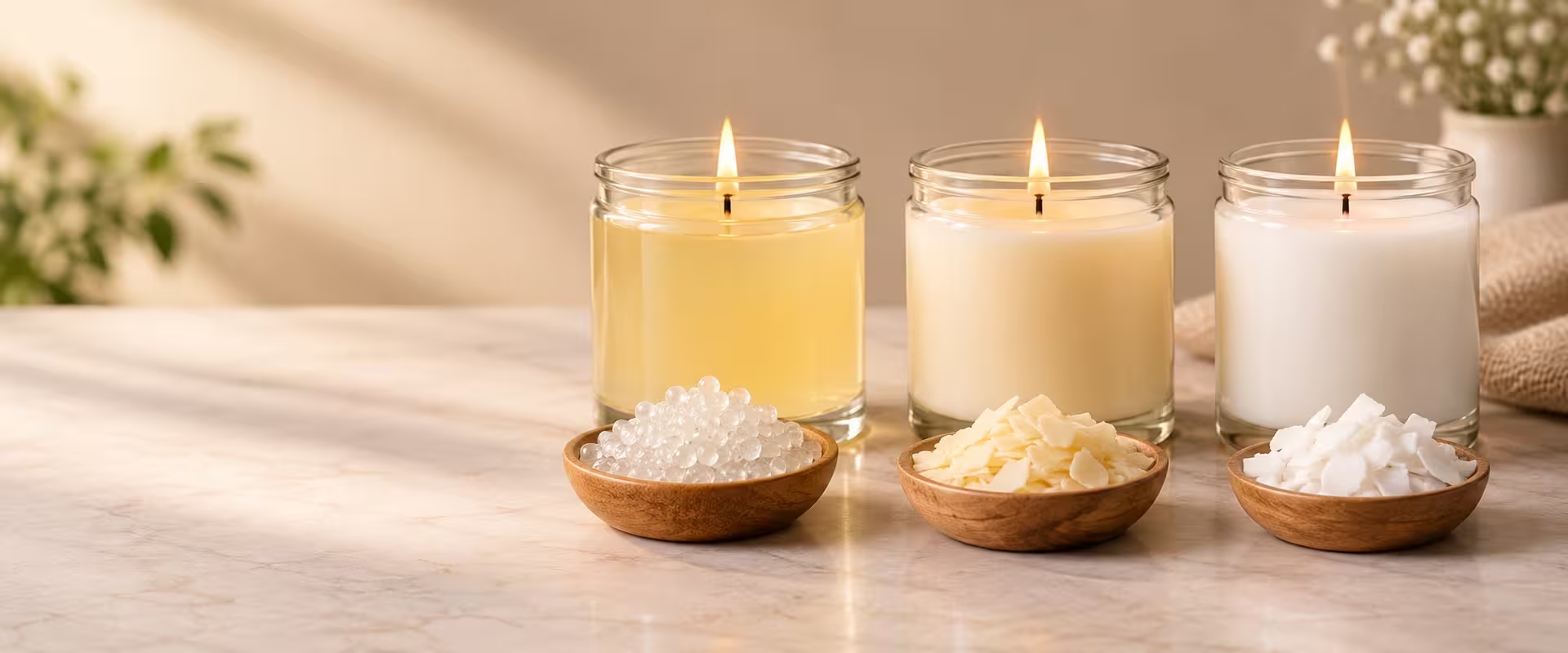
There is no single best candle wax. Paraffin gives a strong scent throw and a smooth finish at a lower cost. Soy suits brands that want a plant-based story and a creamy look. Coconut blends sit at the premium end, with a soft, even burn and good scent throw. The right choice depends on your price point, your brand story and the markets you sell in.
Wax is usually the first decision in a candle range, because it affects the scent, the look, the burn and the price. Here is how the common waxes compare.
Candle wax types, one by one
Paraffin wax
Paraffin is the most widely used candle wax. It holds fragrance well and releases it strongly when lit, so a room fills with scent quickly. It also takes colour evenly and gives pillars and votives a clean, glossy finish.
The drawback is the story. Paraffin comes from petroleum, and some customers now look for plant-based candles. If your brand sells on value or on a bold scent, paraffin is a sound choice. If it sells on sustainability, paraffin may work against you.
Soy wax
Soy wax is made from soybean oil. It burns at a lower temperature than paraffin, which suits jar candles, and it gives a soft, creamy surface. Its scent throw is usually gentler, so it needs careful fragrance and wick testing to reach the strength customers expect.
Soy can "frost", leaving white crystal marks on the surface or the sides of the jar. Frosting doesn't affect the burn, but some customers read it as a fault. Coloured soy candles show it more clearly than white ones.
Coconut wax candles
Coconut wax is almost always a blend, often with soy or another plant wax, because coconut oil alone is too soft. These blends burn evenly, look smooth and creamy, and carry fragrance well. They cost more, so they fit premium and luxury ranges best.
Rapeseed wax
Rapeseed wax is a plant wax popular with European brands. It behaves much like soy, with a creamy look and a moderate scent throw.
Palm wax
Palm wax forms crystal or feather patterns as it sets, which makes it a good choice for decorative pillars. Palm oil sourcing is a known concern, so ask for RSPO certification, which shows the palm oil comes from certified sustainable sources.
Wax blends
Many finished candles use a blend. Paraffin and soy together can give a stronger scent than pure soy, at a lower cost than coconut. A blend lets your manufacturer balance scent, look and price for your range.
Check how the blend is described on your label, since "soy candle" means different things in different markets.
Candle wax types at a glance
| Wax | Source | Scent throw | Look | Typical use | Cost |
|---|---|---|---|---|---|
| Paraffin | Petroleum | Strong | Smooth, glossy, holds colour well | Jars, pillars, votives | Lower |
| Soy | Soybeans | Gentle to moderate | Creamy, matte, can frost | Jar candles | Moderate |
| Coconut (usually a blend) | Coconut oil, blended with soy or other waxes | Good | Creamy, smooth | Premium jar candles | Higher |
| Rapeseed | Rapeseed (canola) oil | Moderate | Creamy | Jar candles, common in Europe | Moderate |
| Palm | Palm oil | Moderate | Crystal or feather patterns | Pillars, decorative candles | Moderate |
| Blends | A mix of the above | Depends on the blend | Depends on the blend | Any format | Varies |
These are general traits. The fragrance, wick and vessel change how a finished candle performs, so always burn-test samples of your own candle before you judge a wax.
Best wax for scented candles: how to choose for your brand
Start with your price point
A value range points to paraffin or a paraffin blend. A premium range points to coconut blends or soy.
Match your brand story
If you promote plant-based or sustainable candles, choose a plant wax and make sure every claim on the label is true.
Think about the format
Jars work with all waxes. Pillars need a harder wax such as paraffin or palm.
Test with your fragrance
The same scent can be strong in one wax and faint in another. Burn-test samples in your final vessel.
Check your markets
Labelling rules for candles differ between the EU, UK, US and other markets, and they apply whatever wax you choose.
Questions to ask your candle manufacturer
- Which waxes and blends do you pour, and for which formats?
- Can you show certificates for the wax you use, such as RSPO for palm-based wax?
- How do you test scent throw and burn for a new range?
- Can I compare samples of the same fragrance in two different waxes?
Choosing a wax with Primacy
Primacy Industries Private Limited makes finished jar, pillar and votive candles and wax melts for brands in India and overseas. We use RSPO-certified wax, and our in-house fragrance lab develops and tests scents in the wax and vessel you choose, so you can compare samples before you decide.
See our scented candle manufacturers in India page or read our guide to private label candles.
Send us your briefFrequently asked questions
Is soy wax better than paraffin wax?
Neither is better in every case. Paraffin usually gives a stronger scent throw and a glossier finish at a lower cost. Soy is plant-based and gives a creamy look, but its scent throw is often gentler. Choose the one that fits your price point and brand story.
Which wax has the best scent throw?
Paraffin and coconut blends usually give the strongest scent throw. Soy can perform well too, but it needs the right fragrance and wick. Test samples of your own scent in each wax before you decide.
Why does soy wax frost?
Soy wax forms small crystals as it cools and ages, which show as white marks on the surface or jar. It doesn't affect how the candle burns, and it shows more on coloured candles.
Is coconut wax 100% coconut?
Rarely. Coconut oil is too soft on its own, so coconut wax is usually blended with soy or another wax. Check the blend before you call a candle "coconut wax" on the label.
What wax is best for pillar candles?
Pillars need a harder wax that holds its shape without a container, so paraffin and palm wax are common choices. Soft waxes such as soy and coconut suit jar candles better.


Written by Primacy Industries, which makes private label and contract candles for brands in India and overseas.